IN THE BEGINNING WAS THE END - Jeremy Plint
Old Ambulance Station, Nambour
TAKEOVER 2026
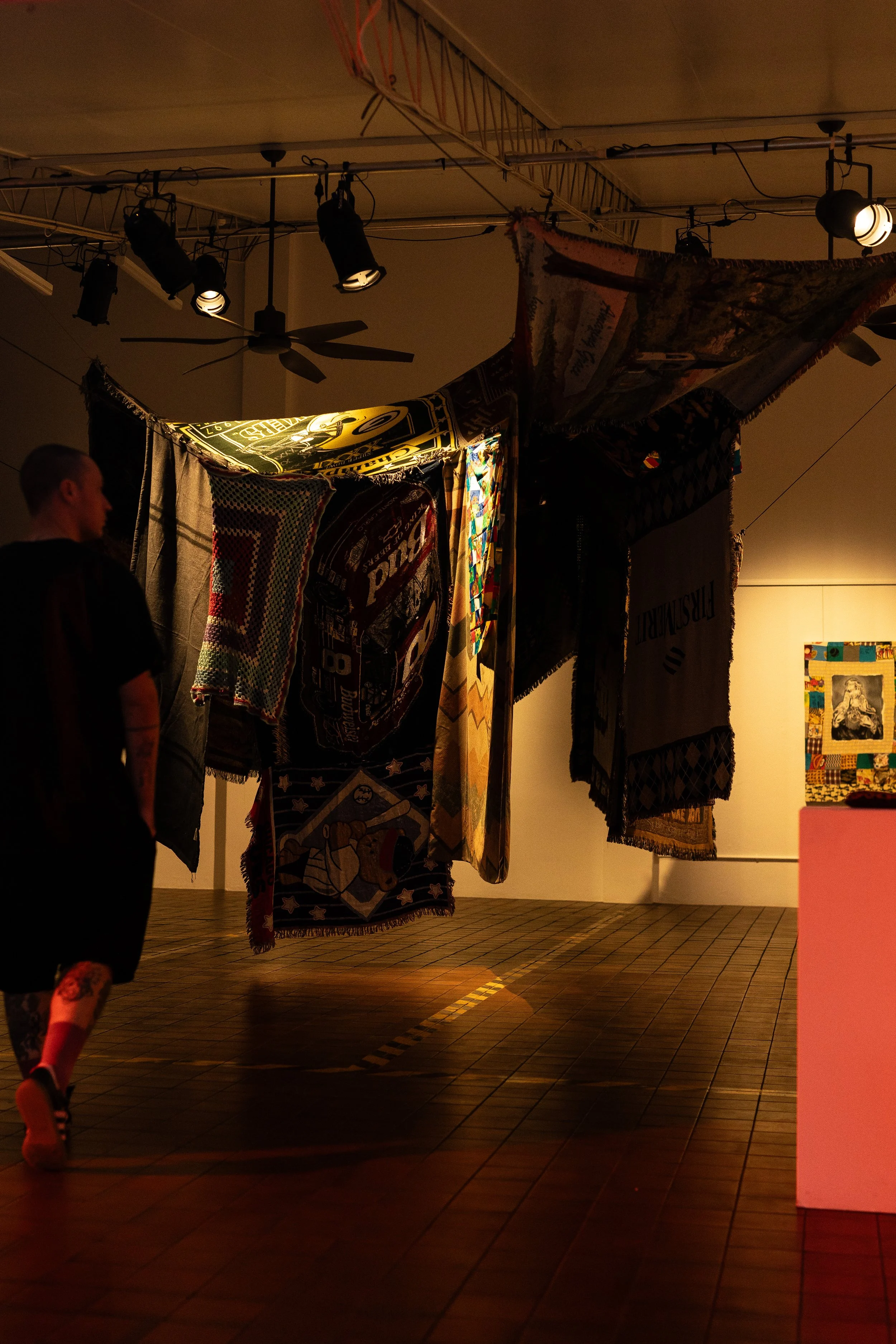
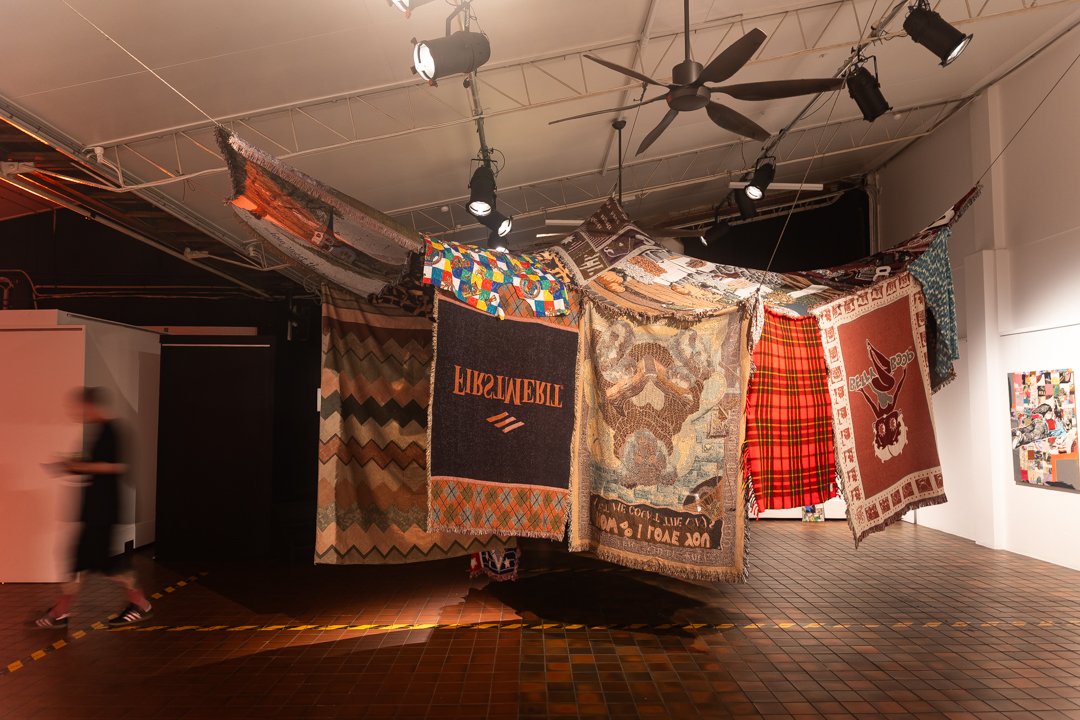
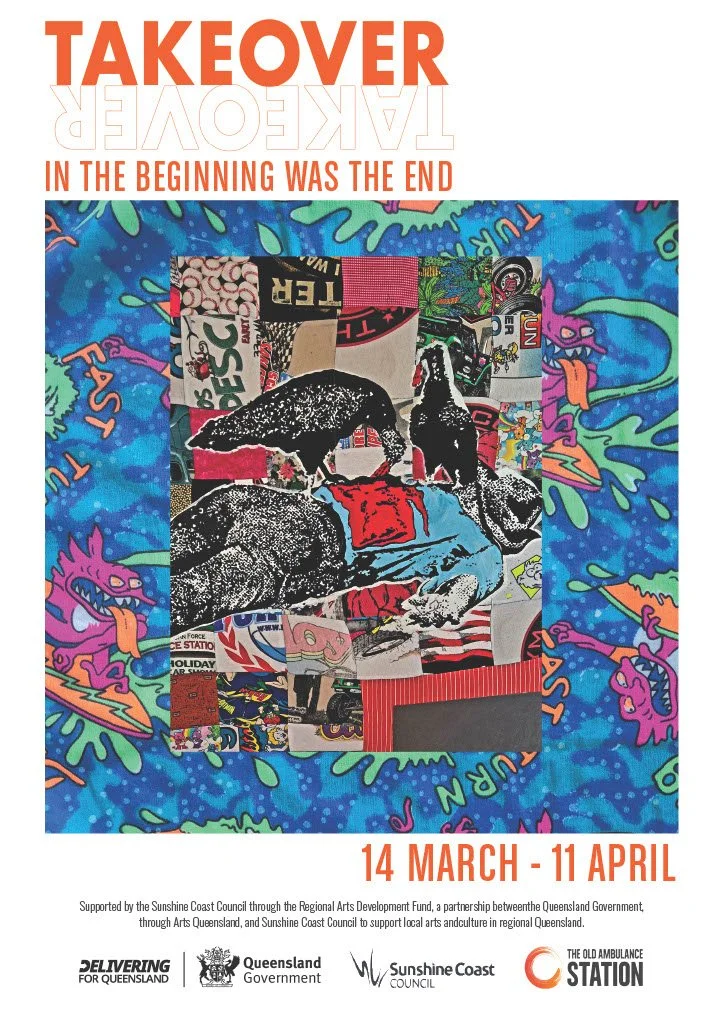
IN THE BEGINNING WAS THE END is an installation-based project that critically engages with memory, grief, and queer belonging through a process-driven, materially grounded research methodology. The work mobilises textile practice not merely as a medium, but as an epistemological framework through which histories are encountered, disrupted, and reconstituted.
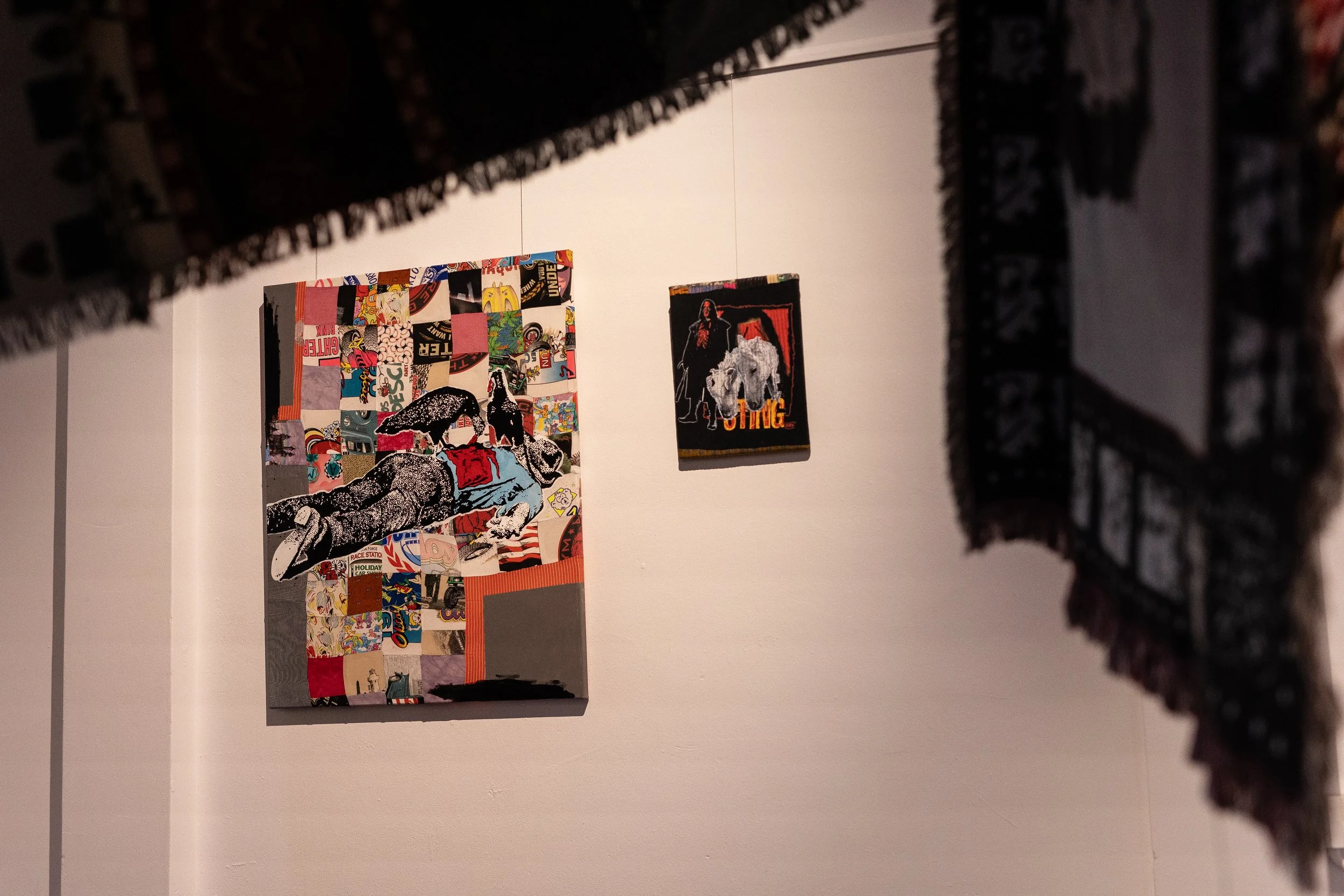
Drawing on the spatial and affective logic of childhood architectures of refuge; the installation interrogates the ambivalence of these forms, positioning them as sites where comfort and precarity, intimacy and loss, are held in tension. Constructed from repurposed textiles, the installation foregrounds the latent histories embedded within material objects, emphasising the instability and subjectivity of remembrance. Fabrics sourced from donations, deadstock, and deceased estates carry with them traces of prior lives, rendering the work a site of both archival recovery and speculative reconstruction. Through acts of cutting, layering, and stitching, these materials are reconfigured, producing a tactile language that resists linear narrative in favour of fragmentation, accumulation, and affective resonance.
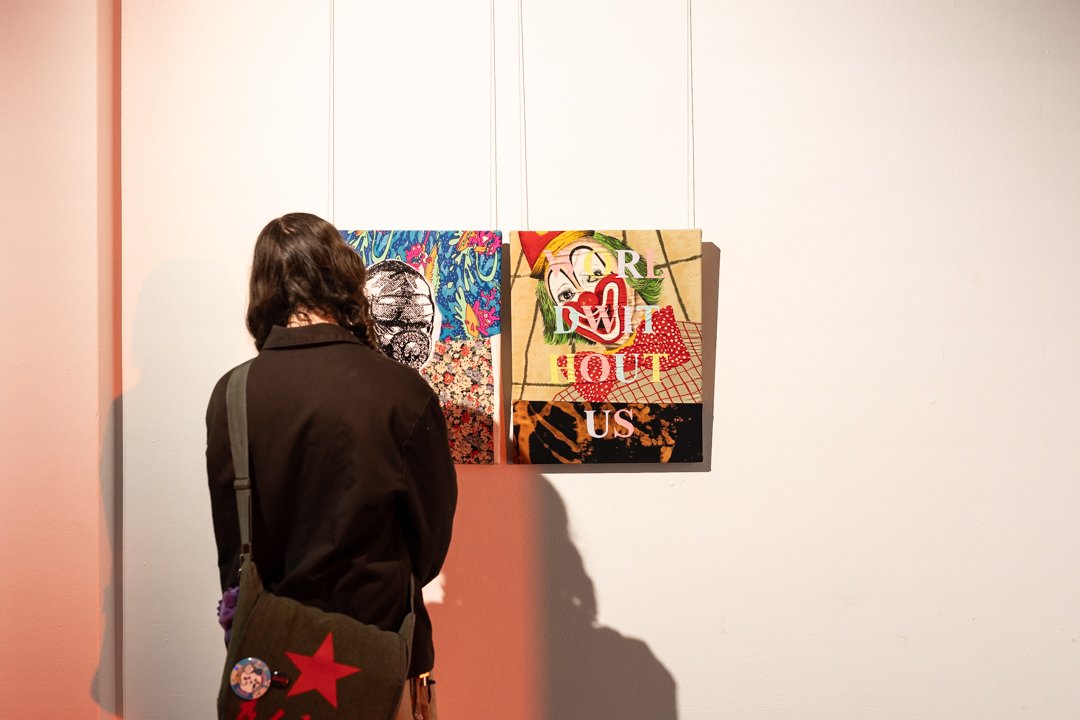
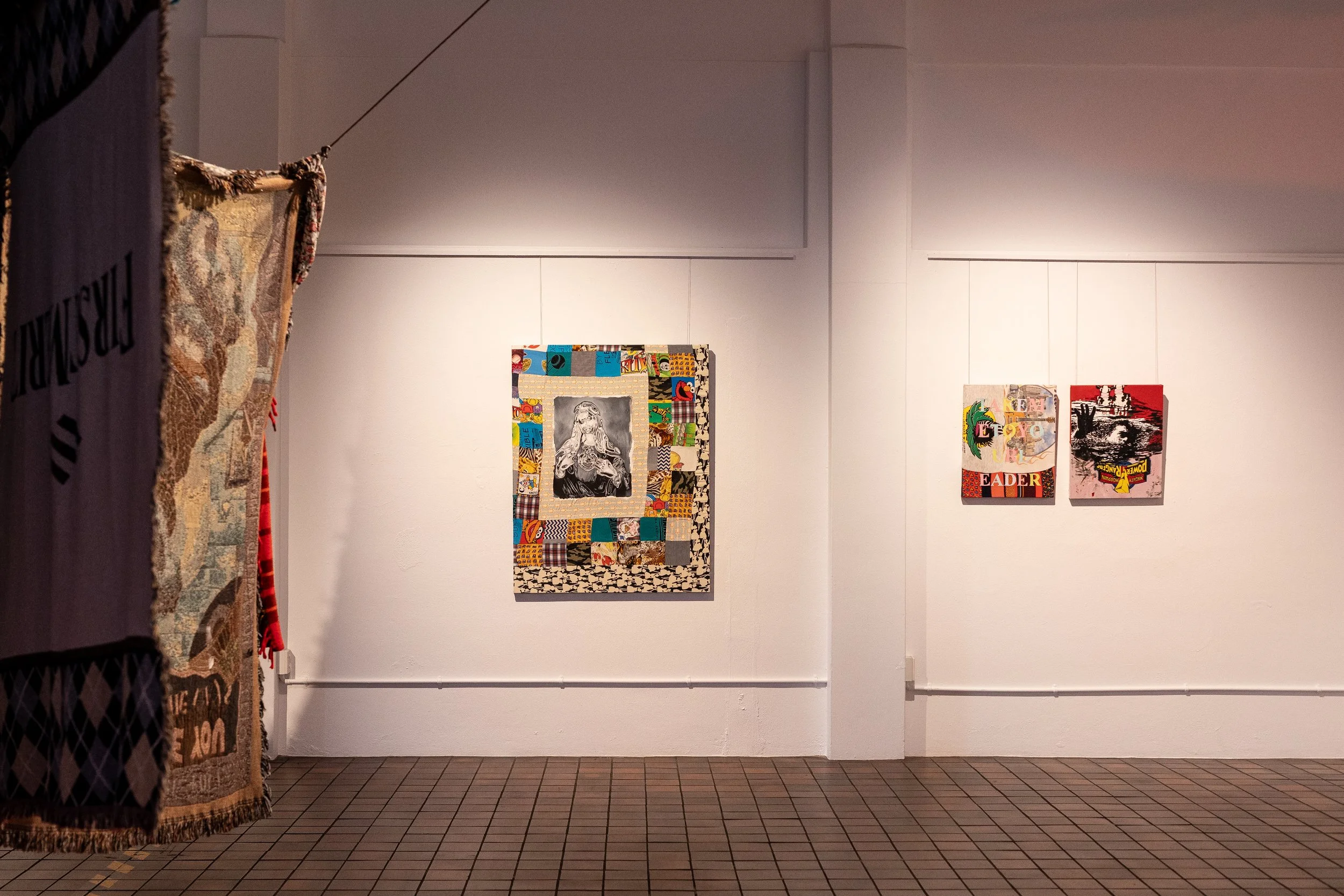
Embedded within the broader installation, quilted and collaged works operate in dialogue with traditions of painting, while simultaneously troubling their conventions. The process of quilting functions here as both a material and conceptual strategy: a mode of binding disparate fragments while acknowledging the impossibility of seamless cohesion. In this sense, the works enact a queer historiography, where narratives are not fixed or resolved, but continually reworked, repurposed, and retold through the interplay of material, memory, and loss.
Throughout the TAKEOVER residency, the artist extends this inquiry through an iterative, site-responsive process, using the residency as both studio and critical framework. Engagement with repurposed textiles and their attendant histories is deepened through ongoing acts of collection, exchange, and reconfiguration, allowing the work to remain materially and conceptually porous. Rather than producing a fixed outcome, the residency facilitates a continual testing of form, scale, and spatial arrangement, in which earlier works are re-situated alongside newly produced elements. This process foregrounds the provisional nature of meaning-making, as the installation evolves in response to the specific conditions of the site, the availability of materials, and the temporal rhythms of the residency itself.
In this context, the TAKEOVER residency becomes an extension of the project’s central concerns: a lived methodology in which making, unmaking, and remaking operate as parallel gestures. The resulting configurations do not seek resolution, but instead sustain a dynamic field of relations between objects, histories, and bodies—where acts of remembering are understood as ongoing, contingent, and collectively negotiated.
Project Documentation: Cynthia Lee